Philodendron (fil-uh-den-druhn) is a diverse genus of over 625 species of tropical flowering plants in the Aroid family, native primarily to Central and South America. Known for their lush foliage and adaptability to indoor environments, they are among the most popular houseplants globally. Their leaves vary significantly in size, texture (from glossy to velvety), and shape, often transforming dramatically between juvenile and adult stages.
The genus is broadly categorized into three main growth habits:
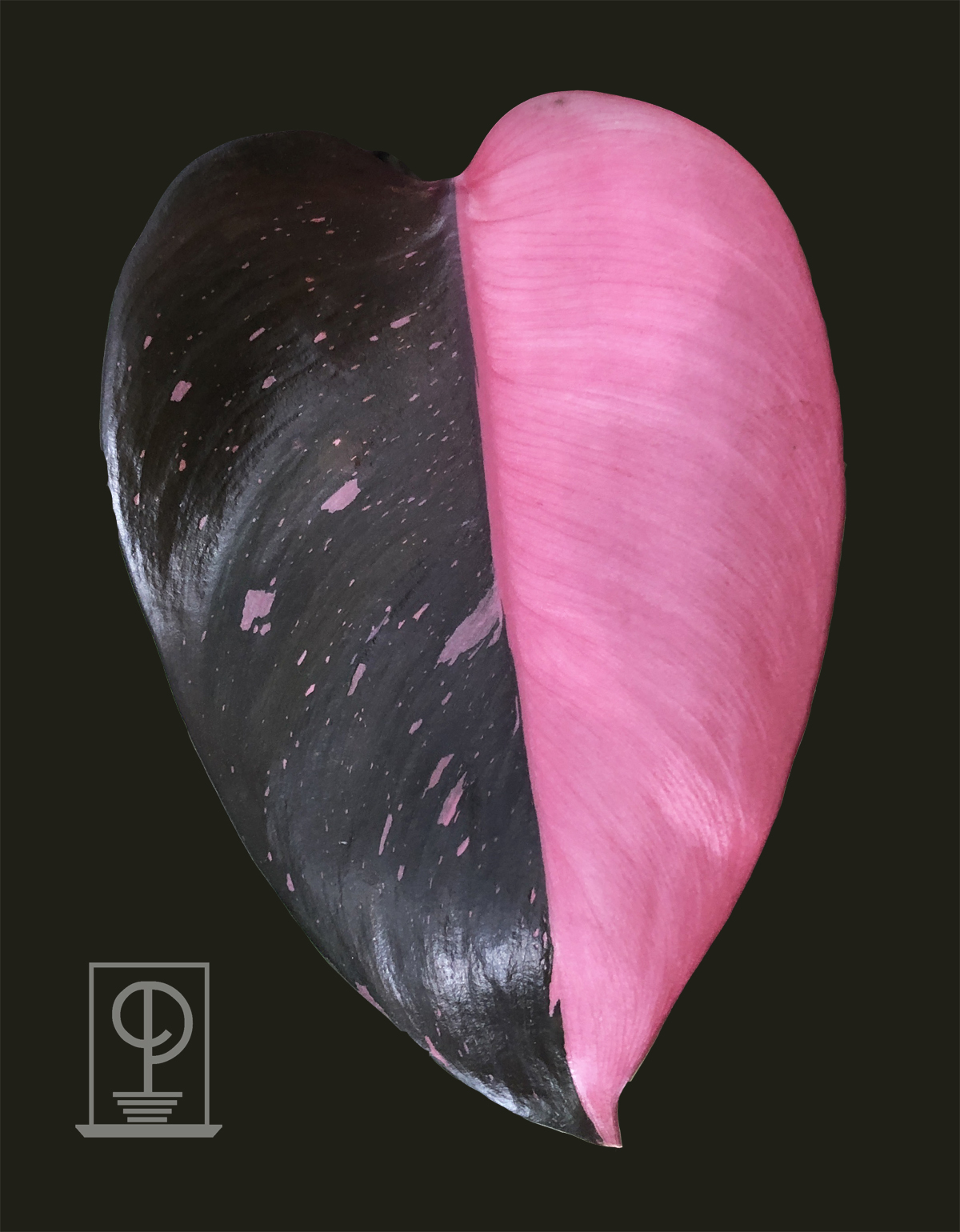
• Vining and Climbing: These varieties use aerial roots to attach themselves to surfaces. While they can trail from hanging baskets, they often grow larger leaves when trained up a support like a moss pole. Common examples include the Heartleaf Philodendron (P. hederaceum) and the colorful ‘Pink Princess’.
• Upright or Self-Heading: These non-climbing types grow from a central clump, featuring thick stems that support their own weight. They tend to have larger, more architectural leaves and can reach substantial sizes, making them ideal as floor plants. Notable varieties include ‘Birkin’, ‘Xanadu’, and the Tree Philodendron (P. bipinnatifidum).
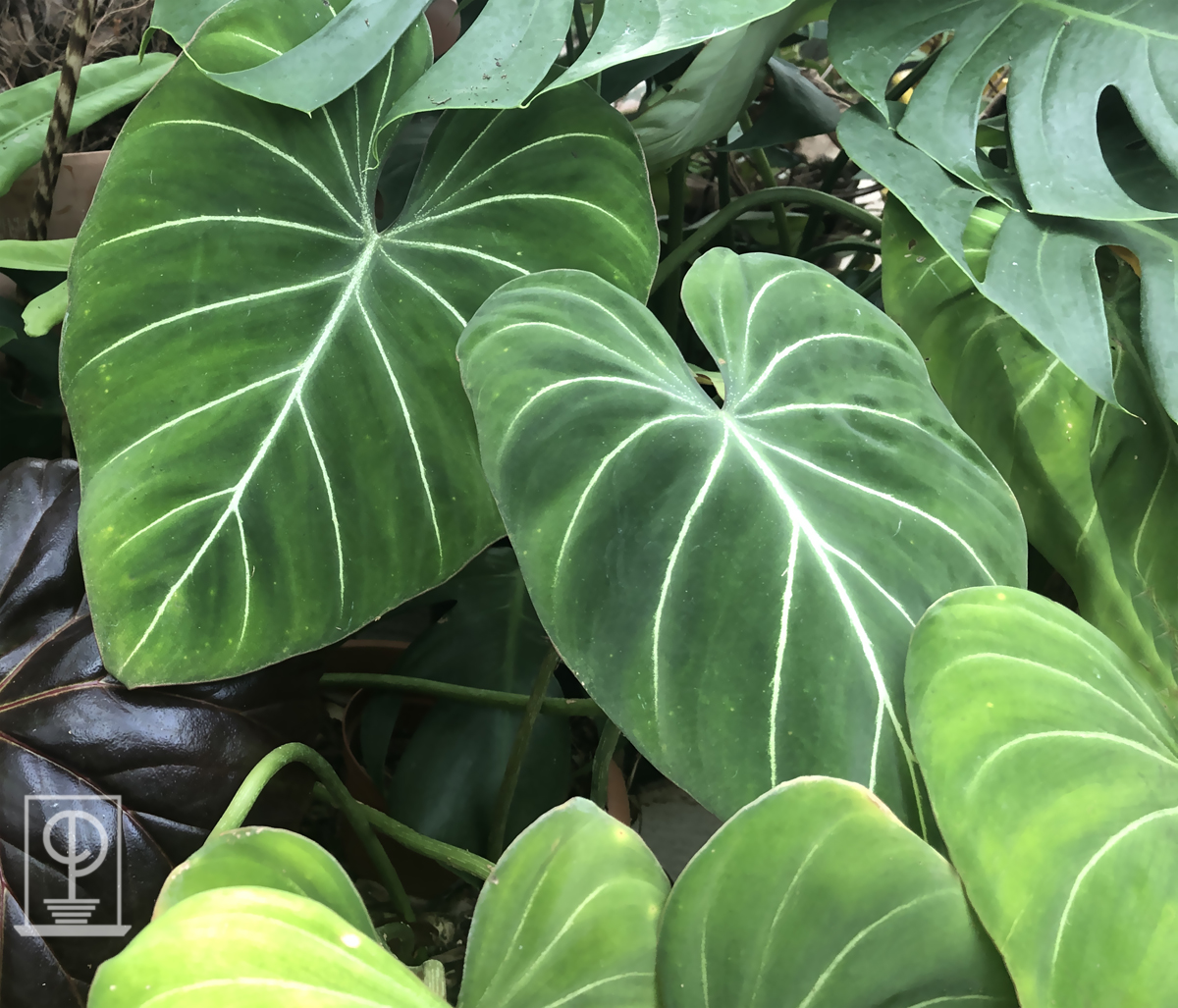
• Creeping (Terrestrial): Less common in general retail but prized by collectors, these types crawl along the forest floor rather than climbing trees. A well-known example is the Philodendron gloriosum, which features large, velvety leaves with prominent white veins.
Varieties and Care
hederaceum
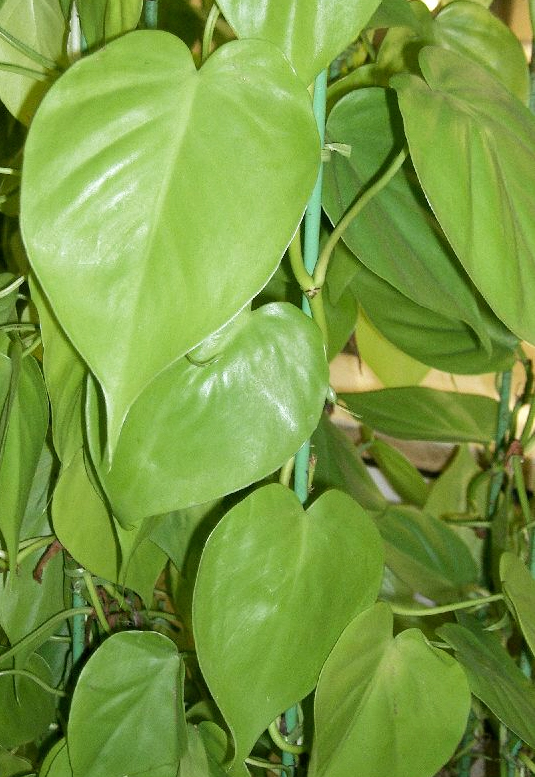
The gold standard for beginners, this plant thrives on minimal care and is highly resilient to varying home conditions. These come in a number of varieties with different variegation such as "Rio", "Brasil" and "Lemon Lime". Micans is another cultivar of hederaceum but that is described in a different slide as its care is different.
| Philodendron hederaceum Care |
|---|
| Difficulty | Easy |
| Light | Medium to bright indirect; will tolerate low light with slower growth. |
| Temperature | 65–85°F |
| Water | Water when the top 1–2″ of soil is dry; it is very forgiving of occasional neglect. |
Birkin
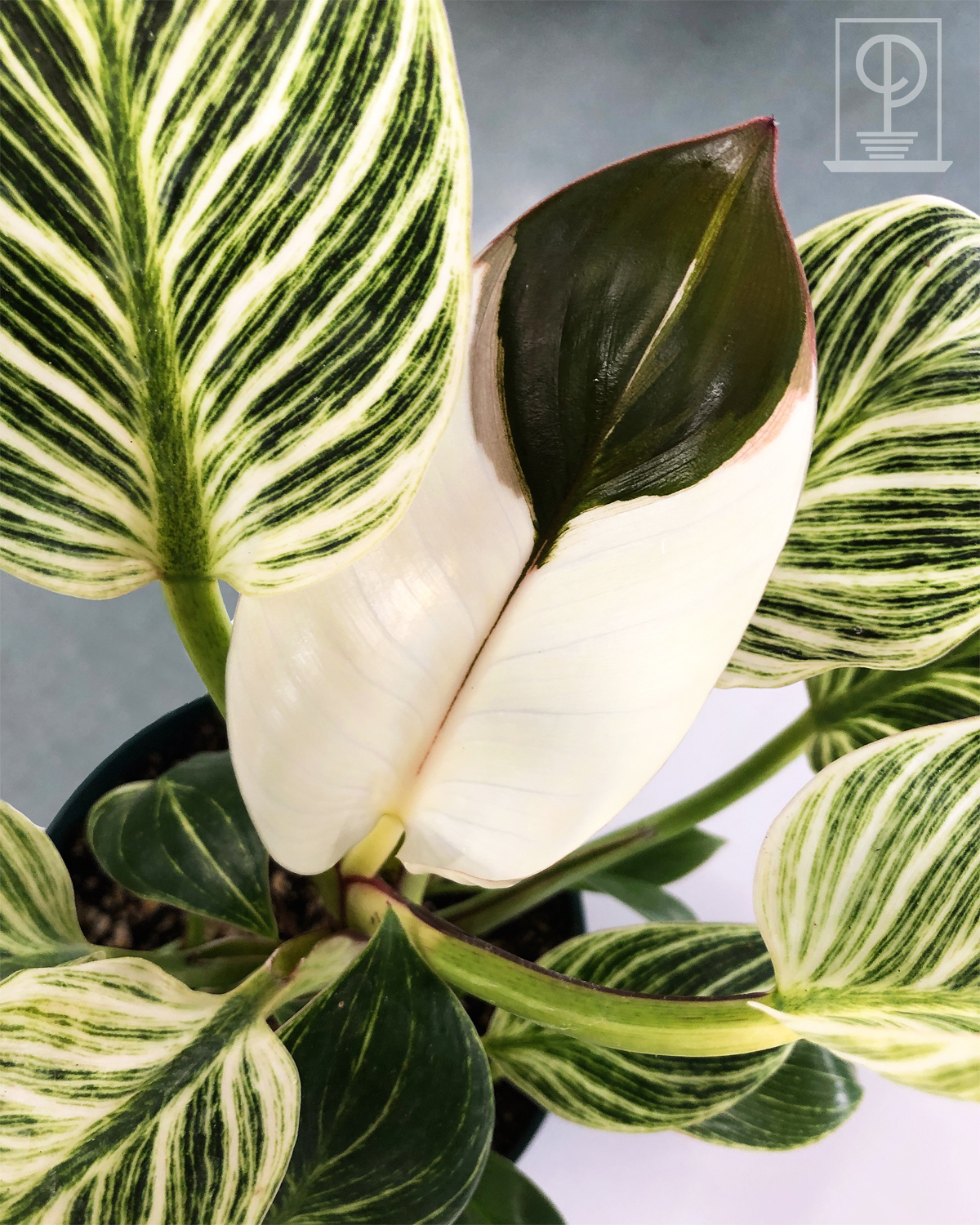
A compact, non-climbing variety prized for its white pinstripes. It requires consistent light to keep its variegation from fading. Once in a while it sends up a completely different leaf, often quite interesting, before going back to growing normally. That variability is actually indicative of their ability to revert to Red Congo (also a beautiful plant), which can happen if left in low light. Despite those idiosyncrasies, Birkin is a very easy plant to grow.
| Philodendron Birkin Care |
|---|
| Difficulty | Easy |
| Light | Bright indirect is essential for variegation; avoid direct sun to prevent leaf scorch. |
| Temperature | 65–85°F |
| Water | Allow the top 1–2″ to dry; it is more prone to rot than vining types, so avoid soggy soil. |
‘Micans’
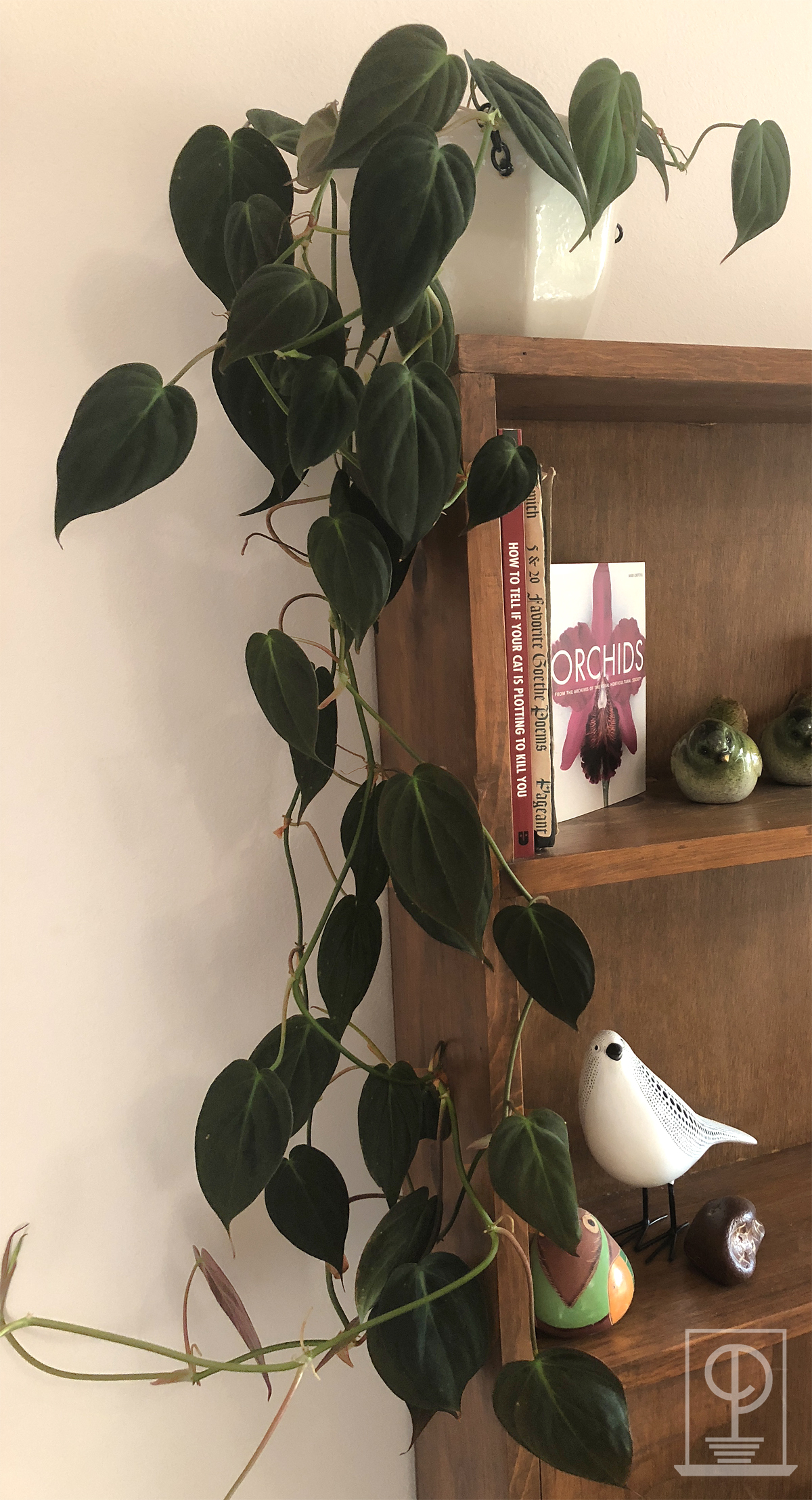
A stunning vining plant with velvety, iridescent leaves that change color depending on the light angle. They thrive in lower light and will lose their velvet texture if given too much light.
| Philodendron Micans Care |
|---|
| Difficulty | Easy |
| Light | Medium indirect light helps maintain its velvet texture and deep bronze/purple hues. Can grow in low light. |
| Temperature | 65–85°F |
| Water | Water when the top 1″ is dry; its leaves will slightly curl inward when it is thirsty. |
erubescens
Pink Princess and similar varieties are forms of ereubescens. It is a vigorous climber that often features reddish stems or variegated leaves. It needs a support structure for its best display.
| Philodendron erubescens Care |
|---|
| Difficulty | Easy |
| Light | Bright indirect light; higher light levels are necessary to maintain pink or white variegation. |
| Temperature | 65–85°F |
| Water | Keep soil slightly moist but not wet; water when the top 25% of the soil feels dry. |
billietiae
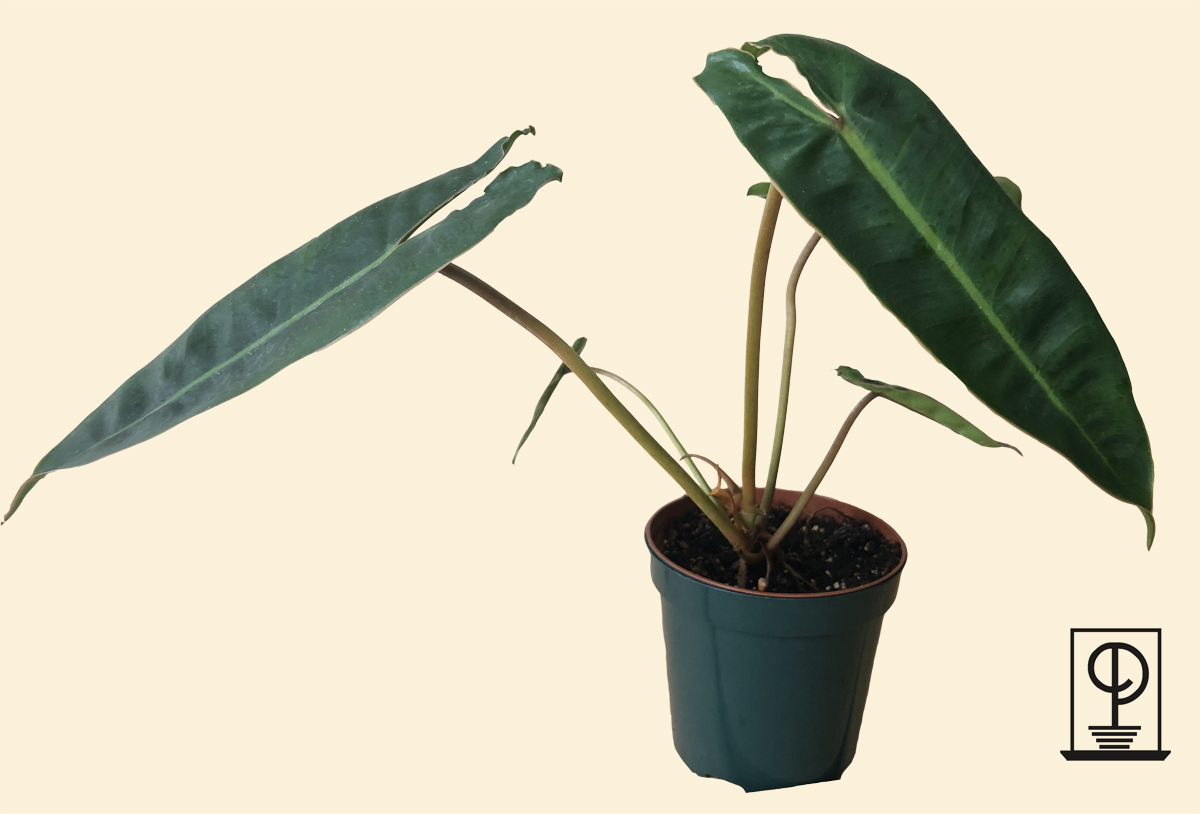
Known for its elongated, heart-shaped leaves and bright orange stems, this species is a sturdy, impressive grower. When mature, it’s leaves can be three feet long and a foot wide!
| Philodendron billietiae Care |
|---|
| Difficulty | Easy to Moderate |
| Light | Bright indirect light; can tolerate some morning sun, which encourages larger leaf growth. |
| Temperature | 65–85°F |
| Water | Prefers to dry out slightly more than others; water when the top 2″ of soil is dry. |
gloriosum
A terrestrial "crawler" with massive, velvety leaves. It needs a long pot as the stem (rhizome) grows horizontally along the soil. It grows well here at the coast but may require extra humidity in drier areas. It’s velvety leaves with intense white veining are an excellent addition to any plant collection.
| Philodendron gloriosum Care |
|---|
| Difficulty | Moderate |
| Light | Bright indirect light is best; too much shade can lead to leggy stems and smaller leaves. |
| Temperature | 65–85°F |
| Water | Maintain consistent moisture without saturation; water once the surface feels dry. |
bipennifolium
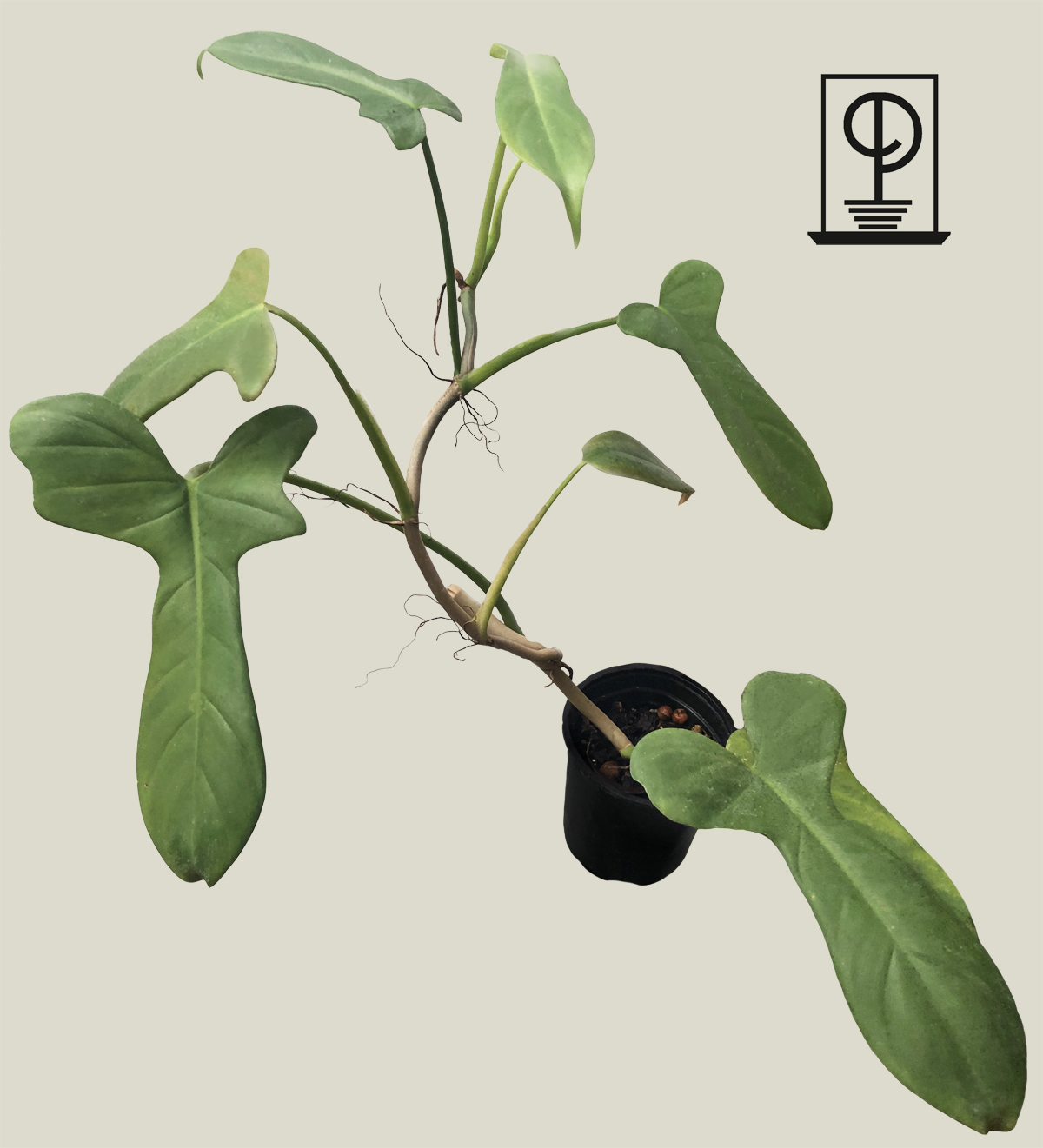
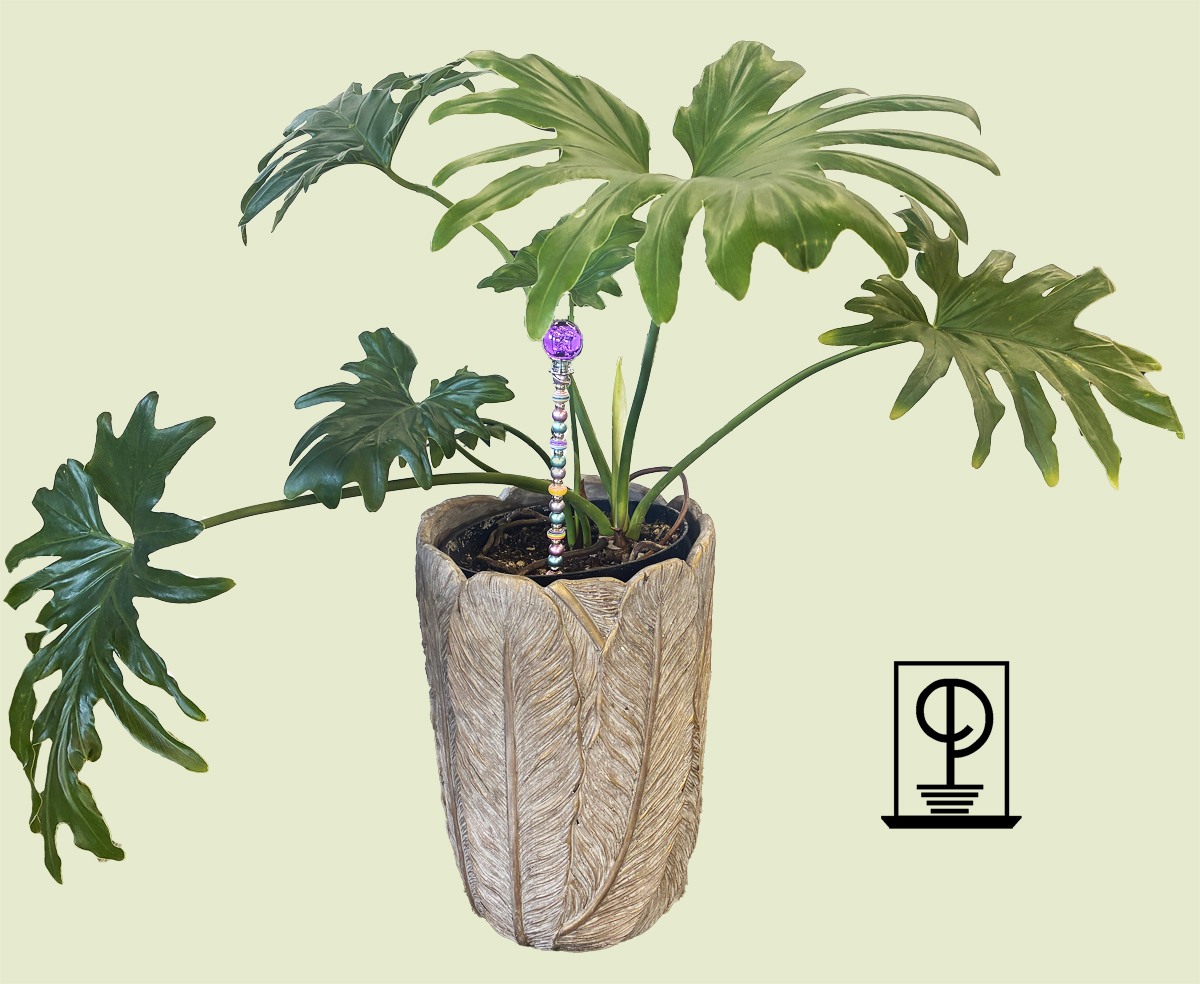
The "Horsehead Philodendron", this climber features uniquely lobed leaves. It is a fast grower and is often used to add vertical greenery to a room. It is a classic houseplant, popular in the 60s and 70s and an architectural addition to any room.
| Philodendron bipennifolium Care |
|---|
| Difficulty | Easy |
| Light | Bright indirect light is ideal; will tolerate medium light but leaves may lose their shape. |
| Temperature | 60–85°F |
| Water | Water thoroughly when the top 1–2" of soil is dry; ensure excellent drainage. |
selloum/xanadu
These are considered by some taxonomists to be in the genus Thaumatophyllum. Thaumatophyllum xanadu is a smaller species and Thaumatophyllum bipinnatifidum (aka Selloum) is a large type. Xanadu makes a tame, exotic houseplant, though it will trunk indoors and grow several feet. Selloum grows into a primal-looking tree with a textured, woody trunk. Thaumatophyllum were previously known as the Tree Philodendrons. They have woody trunks and have deeply lobed foliage. They can be grown outside here at the coast (particularly Selloum) with some protection.
| Thaumatophyllum Care |
|---|
| Difficulty | Easy |
| Light | Bright indirect light to partial shade; can handle more sun than smaller philodendrons. |
| Temperature | 60–80°F |
| Water | Allow the soil to dry out 50–75% between waterings; they are quite drought-tolerant. |
Red Congo
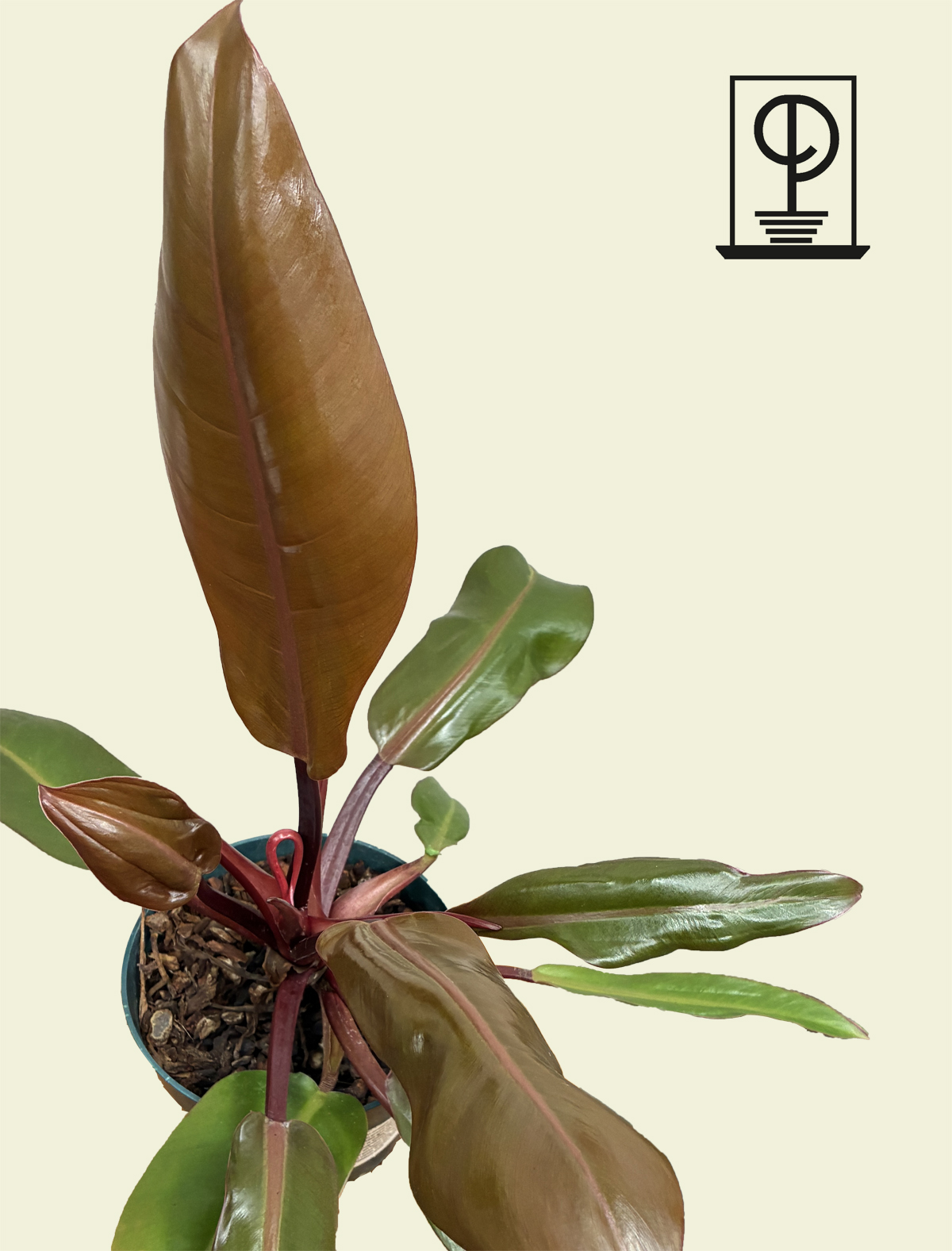
A sturdy, upright grower with thick, glossy leaves that emerge burgundy and mature to deep green. There is also Green Congo, grown with similar care, which looks the same without the burgundy coloring.
| Philodendron Red Congo Care |
|---|
| Difficulty | Easy |
| Light | Moderate to bright indirect light; very adaptable to average office or home lighting. |
| Temperature | 65–85°F |
| Water | Water when the top 1–2″ of soil is dry; its thick leaves allow it to store some water. |
The Planted Parlour’s Tips and Tricks for Success!
- Add a poleFor climbing varieties provide a moss pole, trellis, or other support structure to encourage strong, vertical growth and larger leaves. Prune back overly long or leggy vines in the spring or summer to encourage a fuller shape. For vining types like hederaceum and Micans, staking them on a pole is optional, they’ll be perfectly happy trailing in a hanging basket, but they will always keep their juvenile leaves if not climbing. Their leaves will increase in size if climbing a pole.
- Occasional dusting is a good ideaPhilodendrons don’t necessarily collect dust, but it is good to keep their leaf surfaces clean to optimize their photosynthetic processes. Wipe down the leaves with a damp cloth once every month or two. Be very careful with new leaves as they can be easily damaged.
- Get the light rightPhilodendrons are easy to grow and there are options for every light level. Darker rooms are perfect for Micans or Red Congo. Most of them do well in moderate bright light and xanadu and Selloum can take very bright light, including some direct sun. But it’s important that you know which type you have to ensure it’s in the right spot.
- Make a humidity zoneWhile they’re tough plants, able to endure drier conditions, Philodendrons love humidity. If you have multiple plants including Philodendrons, keep them as close together as possible as they will trade off humidity with each other as they transpire.
Learn More…
The word Philodendron comes from Greek philo, meaning "love", and dendron which means "tree". It was given to the genus in 1829, near the beginning of the European plant craze, by Austrian botanist Heinrich Wilhelm Schott. Schott had several expeditions to Brazil on which he identified over 100 species of Philodendron. There are now over 600 identified species of Philodendron.
Turning Up The Heat
Philodendrons are among the few plants in the world capable of thermogenesis, or generating their own heat. Species like Philodendron bipinnatifidum can raise the temperature of their flowers (the spadix) to as high as 107°F, even when the surrounding air is much cooler.
The heat helps dissipate scents that attract specific beetle pollinators from miles away. Once the beetles arrive, the warm flowers keep them active throughout the night while they feed on male flowers and inadvertently pollenate the next plant.
What’s the Deal With Pothos?
"Pothos" is not a scientific term and as such means different things to different people. Traditionally it was the Epiprinum aurea plant, but the term has since been applied to a number of hanging plants that look somewhat similar, but are not necessarily related. The Velvet Pothos is Philodendron Micans and hederaceum, which looks similar to an Epiprinum, is often considered a Pothos. But the Satin Pothos is a Scindapsis, another genus altogether.