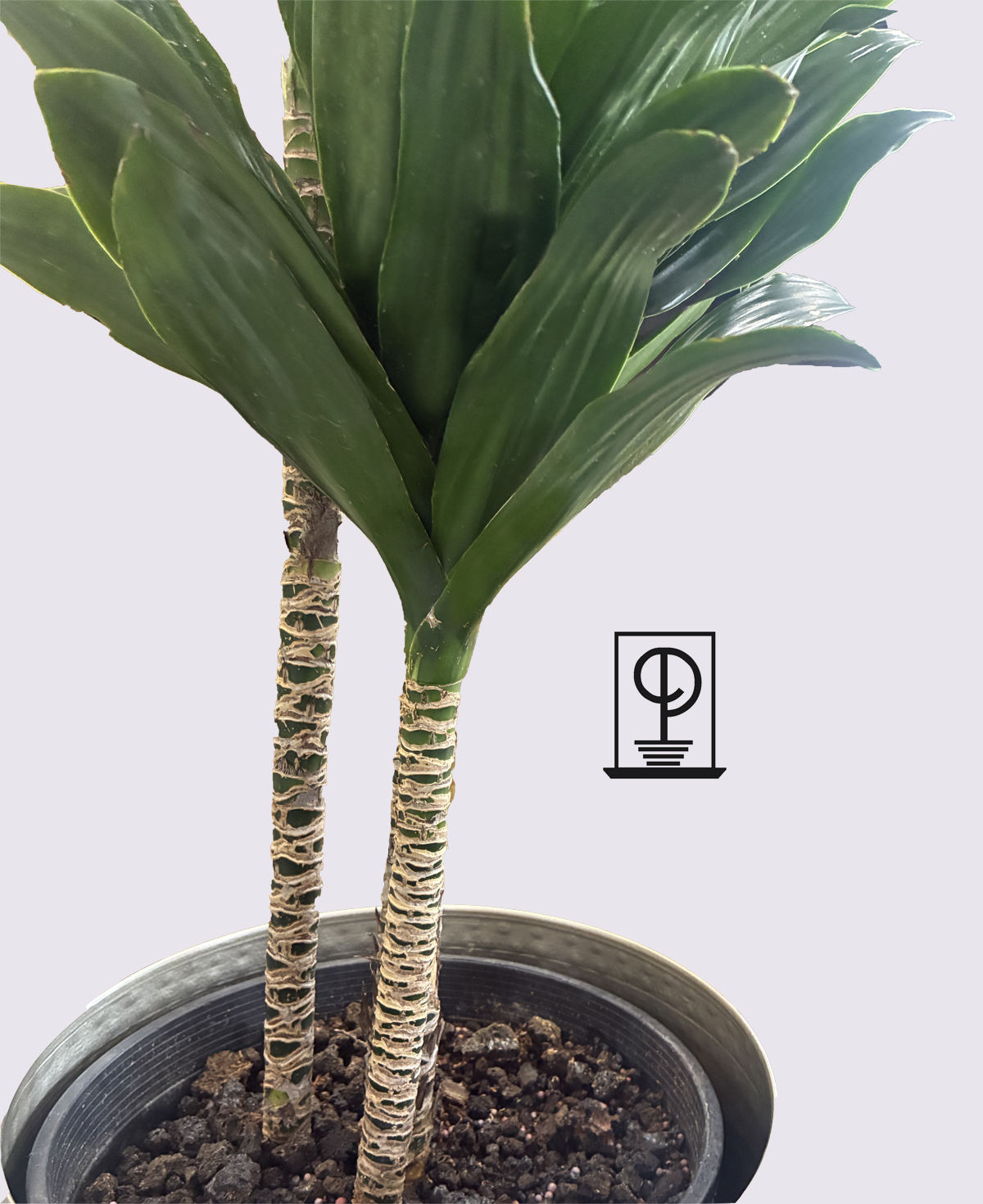
Dracaenas (druh-SEE-nuh) make excellent houseplants, offering a wide range of shapes and sizes. When designing your space, consider Dracaenas offer a diverse range of architectural forms and striking variegation, ranging from common “entry-level” trees to rare, slow-growing specimens.
Varieties and Care
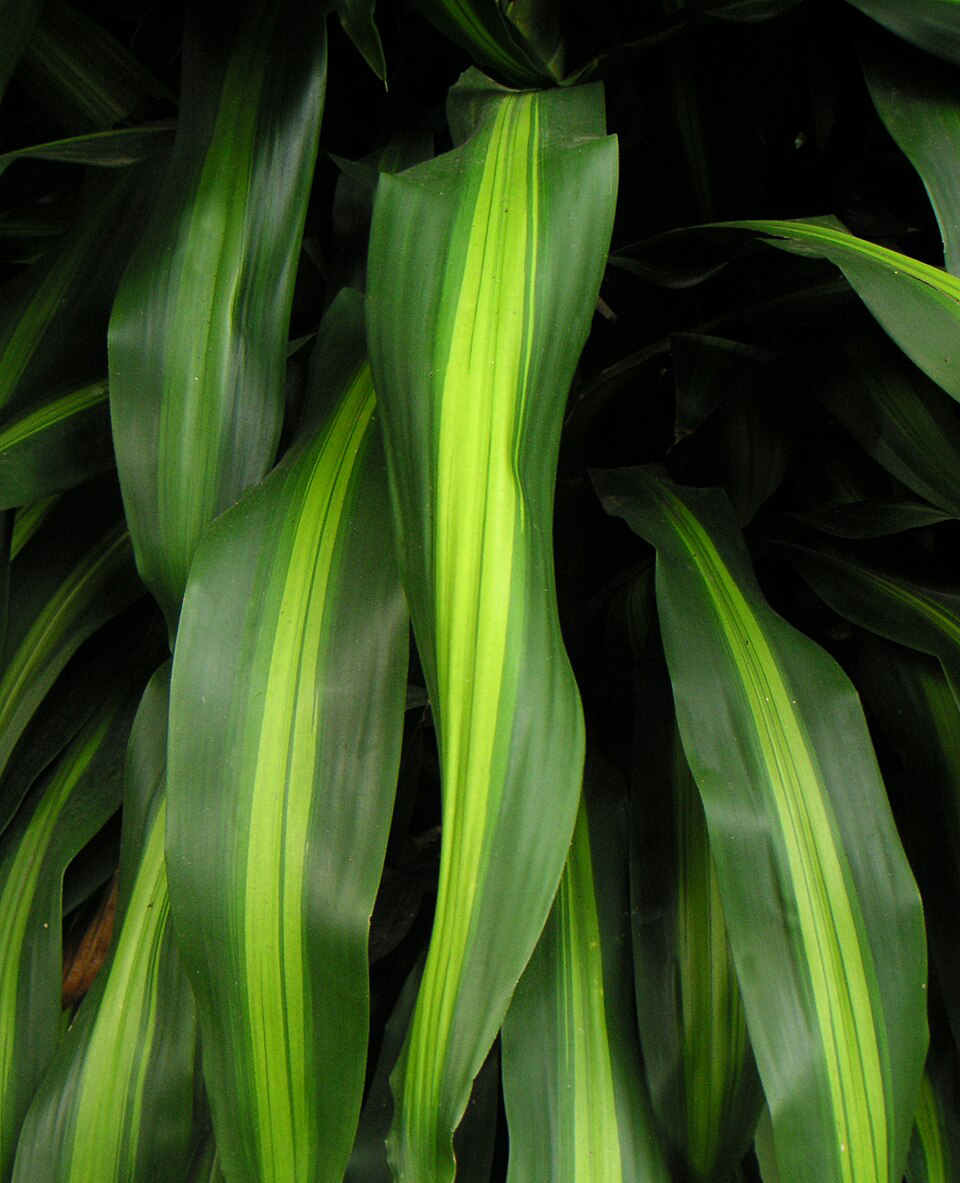
fragrans
Dracaena fragrans is the "Corn Plant". It’s a tough plant and slow-growing.
| Dracaena fragrans Care |
|---|
| Difficulty | Easy |
| Light | Bright Indirect (can tolerate lower light, but growth slows) |
| Temperature | 60°F – 75°F (Avoid drops below 50°F) |
| Water | Allow top 50–75% of soil to dry; highly sensitive to fluoride – if you can use distilled or RO water you will have nicer leaf tips |
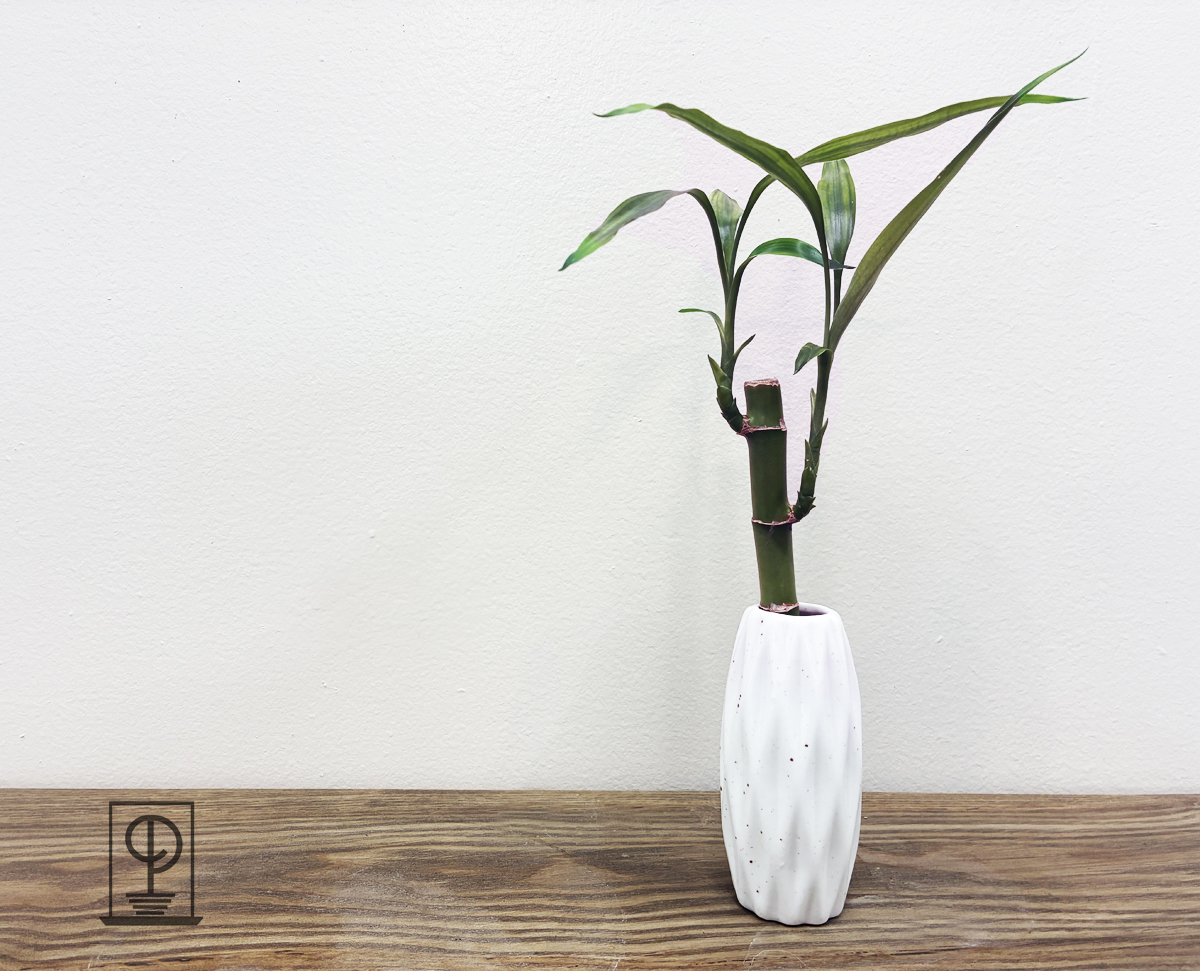
sanderiana
Lucky Bamboo isn’t a bamboo at all! It’s Dracaena sanderiana. And while it’s traditionally sold in water, if you want it to thrive in the long run you should transfer it to well-draining soil.
| Dracaena sanderiana Care |
|---|
| Difficulty | Easy |
| Light | Low to Moderate Indirect (direct sun will scorch leaves) |
| Temperature | 65°F – 90°F (Prefers warmer, tropical conditions) |
| Water | If in water: Change weekly; use distilled/rain. If in soil: Keep evenly moist. |
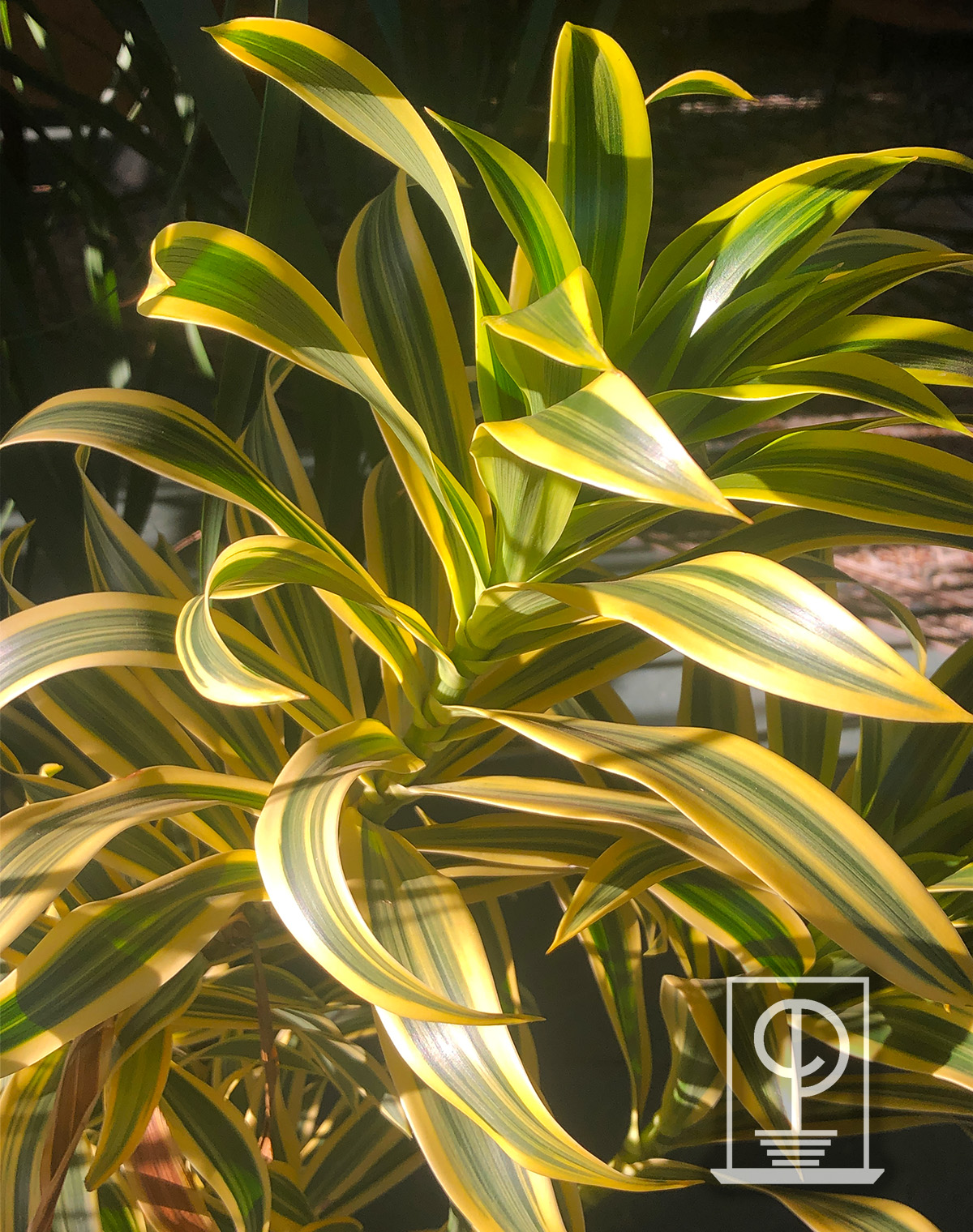
reflexa
Formerly in the genus Pleomele, Dracaena reflexa is commonly called "Song of India". It is very sensitive to inconsistent watering and major changes in humidity.
| Dracaena reflexa Care |
|---|
| Difficulty | Moderate |
| Light | High Indirect (needs more light to maintain its yellow variegation) |
| Temperature | 65°F – 80°F (Very sensitive to cold windows and AC drafts) |
| Water | Keep slightly moister than others; prefers 50%+ humidity – grows well here at the coast with our high-humidity |
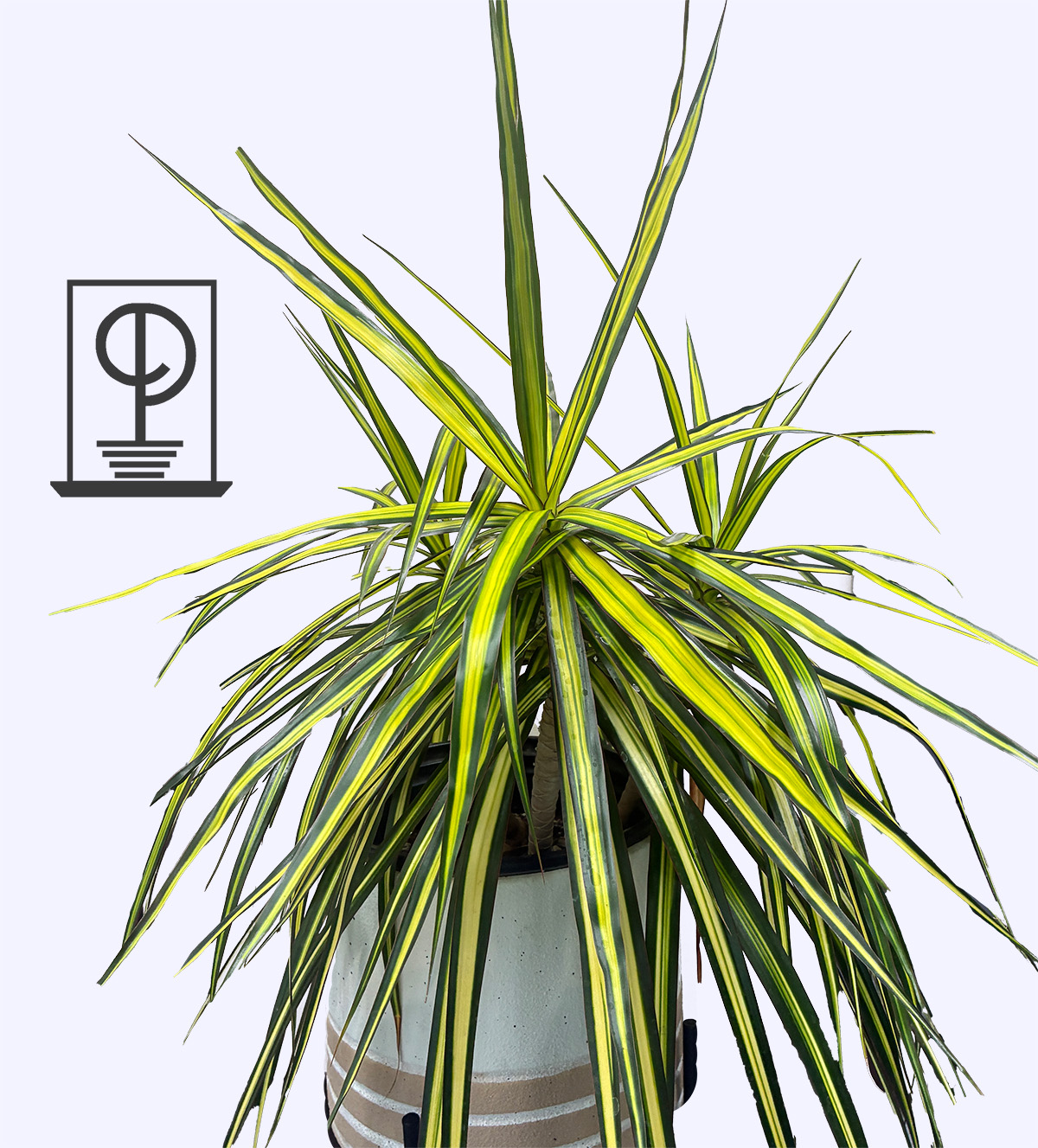
marginata
Not to be confused with the Dragon Blood Tree (another Dracaena), Dracaena marginata is known as the Dragon Tree. It is a beautifully architectural plant, adding interest to any decor.
| Dracaena marginata Care |
|---|
| Difficulty | Easy |
| Light | Bright Indirect (becomes "leggy" or thin if light is too low) |
| Temperature | 65°F – 75°F (Tolerates standard household ranges well) |
| Water | Allow top 1–2 inches to dry – can be allowed to go very dry |
deremensis
Commonly found in the variety ‘Janet Craig’, which is the compact form, this beautiful Dracaena has a reptilian trunk and compact head of foliage that is striking in any decor.
| Dracaena deremensis Care |
|---|
| Difficulty | Easy |
| Light | Medium to Bright Indirect |
| Temperature | 65°F – 75°F (Tolerates standard household ranges well) |
| Water | Allow to go mostly dry between watering – likes well drained soil |
The Planted Parlour’s Tips and Tricks for Success!
- The water is importantOftentimes you’ll see brown tips on Dracaenas. Brown leaf tips are typically from the plant trying to discard minerals it doesn’t want. It pushes the unwanted stuff to the tip and slowly the leaf browns before it discards it (sort of like a plant pooping). Dracaenas are sensitive to fluoride and many minerals that are in our tap water. To avoid brown leaf tips, try to use only distilled or RO water with the plant.
- Include Dracaenas in Your DustingAt least once in a while, give your Dracaena’s leaves a dusting. Wiping them down with a damp cloth is even better. This keeps them photosynthesizing efficiently.
- Choose Your StyleMost Dracaenas naturally grow straight up (apically), without branching. You can get them to branch by finding one of the nodes, or "eyes", along the bare stem where a leaf used to be and cutting a crescent shaped notch just above it. This will cause the plant to branch at that spot.
Learn More…
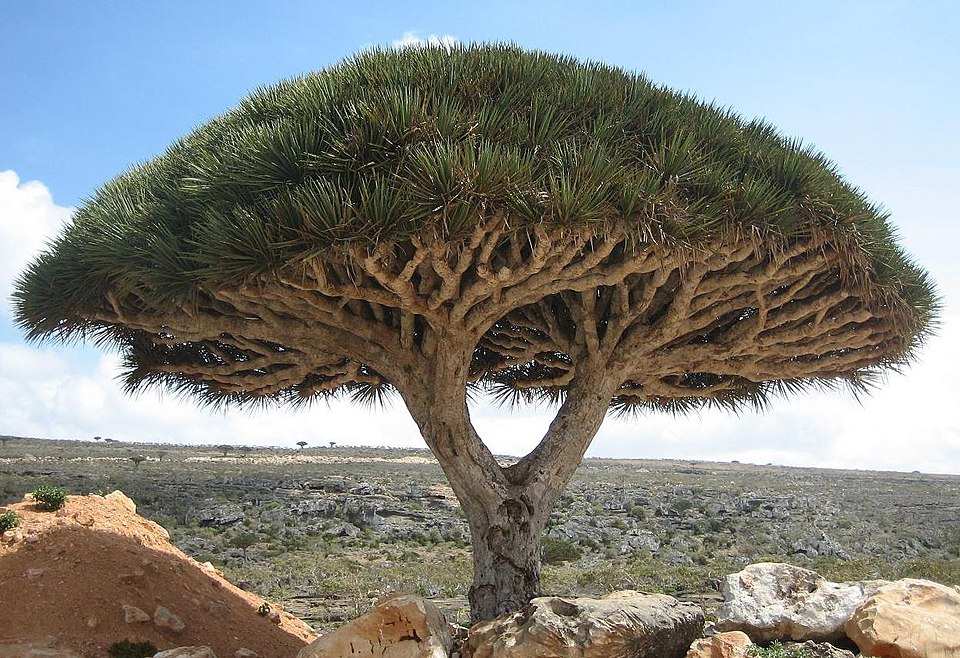 Socotra Island is home of numerous unique plants that are found nowhere else in the world. Its most iconic plant is a Dracaena: Dracaena cinnabari, the Dragon’s Blood Tree (see photo). This tree is where the genus gets its name, Dracaena coming from the Greek drakaina which means "female dragon". When its bark is nicked it "bleeds" a thick red resin, which was incorporated into ancient lore as a dragon bleeding from battle.
It was highly valuable in the ancient world, used for wound sealing by Roman gladiators and alchemists believed it made their potions stronger. Italian violin makers, including Stradivarius, used the resin to stain their instruments.