


Begonia
xBegonia (bə’gōnyə) is a genus of plant that comes from tropical and sub-tropical climates. Most are easy to grow and have leaves with rewarding shapes, patterns and textures. They make great houseplants and many are hardy outside here at the coast.
Varieties and Care
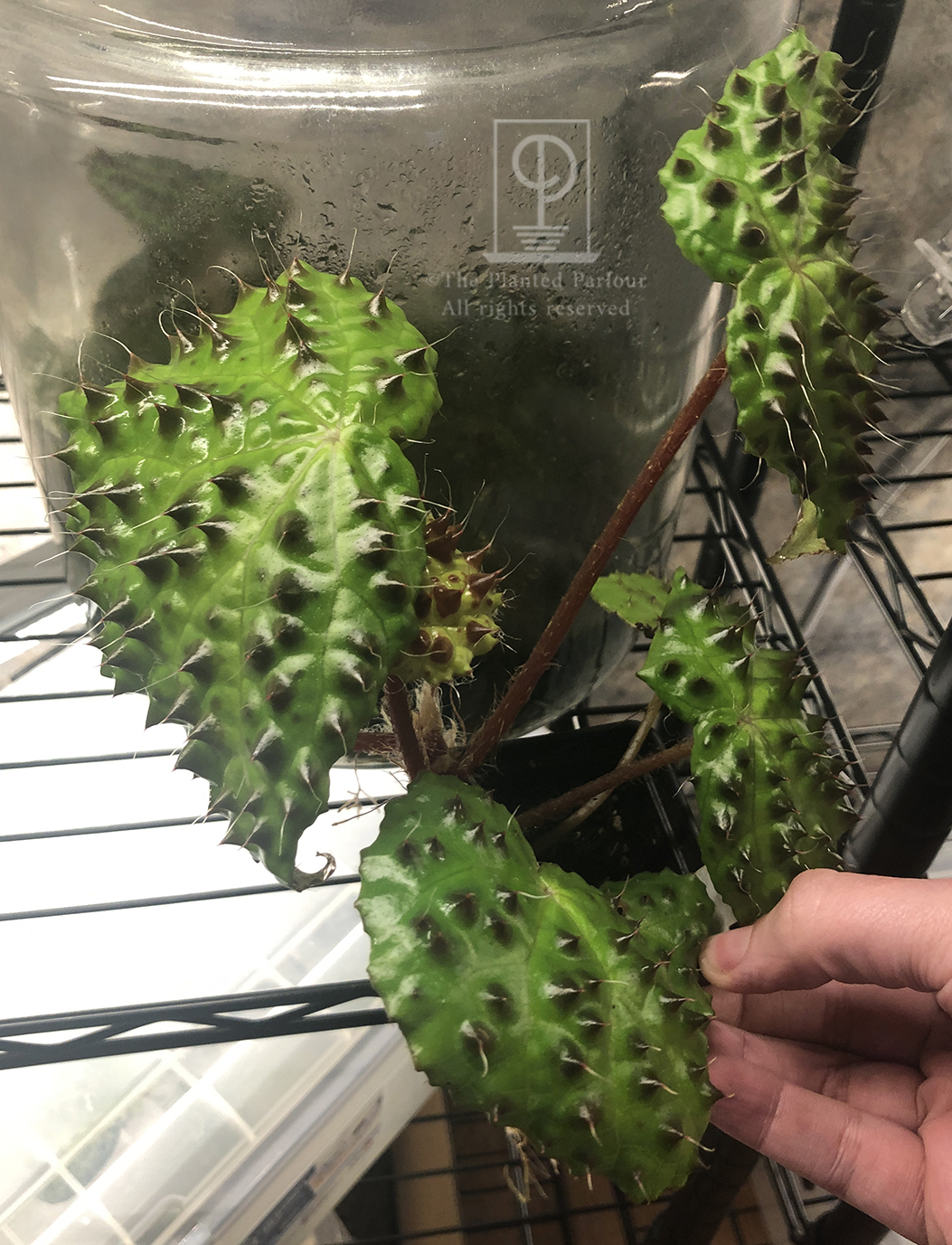
| Terrarium Begonia Care | |
|---|---|
| Difficulty | Moderate to Difficult |
| Light | Low light, never direct sun. Artificial light works well. |
| Temperature | Keep warm (room temperature) and prevent overheating. |
| Water | These need high humidity. They must be grown in a terrarium and kept at 65% humidity or higher |
The Planted Parlour’s Tips and Tricks for Success!
- Begonias Don’t Like Wet FeetIf the soil feels moist and you’re unsure whether it’s dry enough to water, skip the water and check the next day.
- The Thing About Rex Begonias…Rex Begonias have a particular habit of drooping when temperatures rise above 80° or so. When temperatures return to normal they perk back up. Be careful not to interpret the drooping as a cry for water, or you may end up giving your Rex the wet feet it doesn’t want.
- Respect the RestSome Begonias can go dormant. Some do so regularly (such as hardy Begonia grandis and Tuberous Begonias) and others do so when they feel the need to take a break and then regrow (such as Rhizomatous and Rex). Water them very little (or not at all with the truly dormant ones) until they start to put out some new growth.
Learn More…
 One of the most shared begonia anecdotes doesn’t come from a jungle expedition, but from a quiet house in Princeton, New Jersey, belonging to none other than the brilliant physicist Albert Einstein.
For the last two decades of his life, Einstein lived at 112 Mercer Street. He was famous for his messy white hair and not wearing socks on his daily walk to work. In his home, he kept a simple, green begonia houseplant. It wasn’t a rare or fancy type; just a regular, green, fibrous-rooted begonia.
After Einstein passed away in 1955, his longtime secretary, Helen Dukas, took care of his home and belongings. She decided that the best way to honor the quirky genius was not with a statue or plaque, but by giving away cuttings of his favorite plant to his physics friends and colleagues at Princeton University.
This begonia, affectionately nicknamed “Einstein’s Begonia,” became a living piece of history. Cuttings of cuttings were passed around among professors for decades. It still thrives in homes today, a simple houseplant linked to one of the smartest people in history. The story proves that even a basic houseplant can have a fun, surprising history if it hung out with the right person.
Begonia plants are both male and female
Begonias are monoecious plants, meaning they have separate male and female flowers on the same plant. The male flower is typically the more showy, often double flower with numerous stamens. The female flower is usually a simpler, single bloom distinguished by a prominent, often three-winged, seed pod (ovary) at its base, which contains the branched stigmas that receive pollen.
A Begonia Species Gallery
A selection of photos of Begonia species(All photos copyright The Planted Parlour).
"Species" means the plant as it is found in its natural habitat, not hybridized by people.