


ZZ Plant
xZZ Plant is much easier to say than the actual name: Zamioculcas zamiifolia. It is also known as the Zanzibar Gem. It is native to East Africa, growing from Kenya to South Africa. These are one of the most resilient indoor plants available today, known for its deep green, glossy leaves and its ability to thrive on near-total neglect. It is available in small, medium and large sizes and there’s even a very exotic black leaved variety that has new growth emerging bright green before turning a glossy black.
| ZZ Plant Care | |
|---|---|
| Difficulty | Easy |
| Light | While it prefers bright, indirect light, it is famous for surviving in extremely low light, including windowless offices with only fluorescent lighting. |
| Temperature | It thrives in standard home temperatures between 65°F and 75°F. It should be kept away from cold drafts and temperatures below 50°F. |
| Water | It has potato-like rhizomes (underground stems) that store water for long periods. You should only water when the soil is completely dry, typically every 2–3 weeks. |
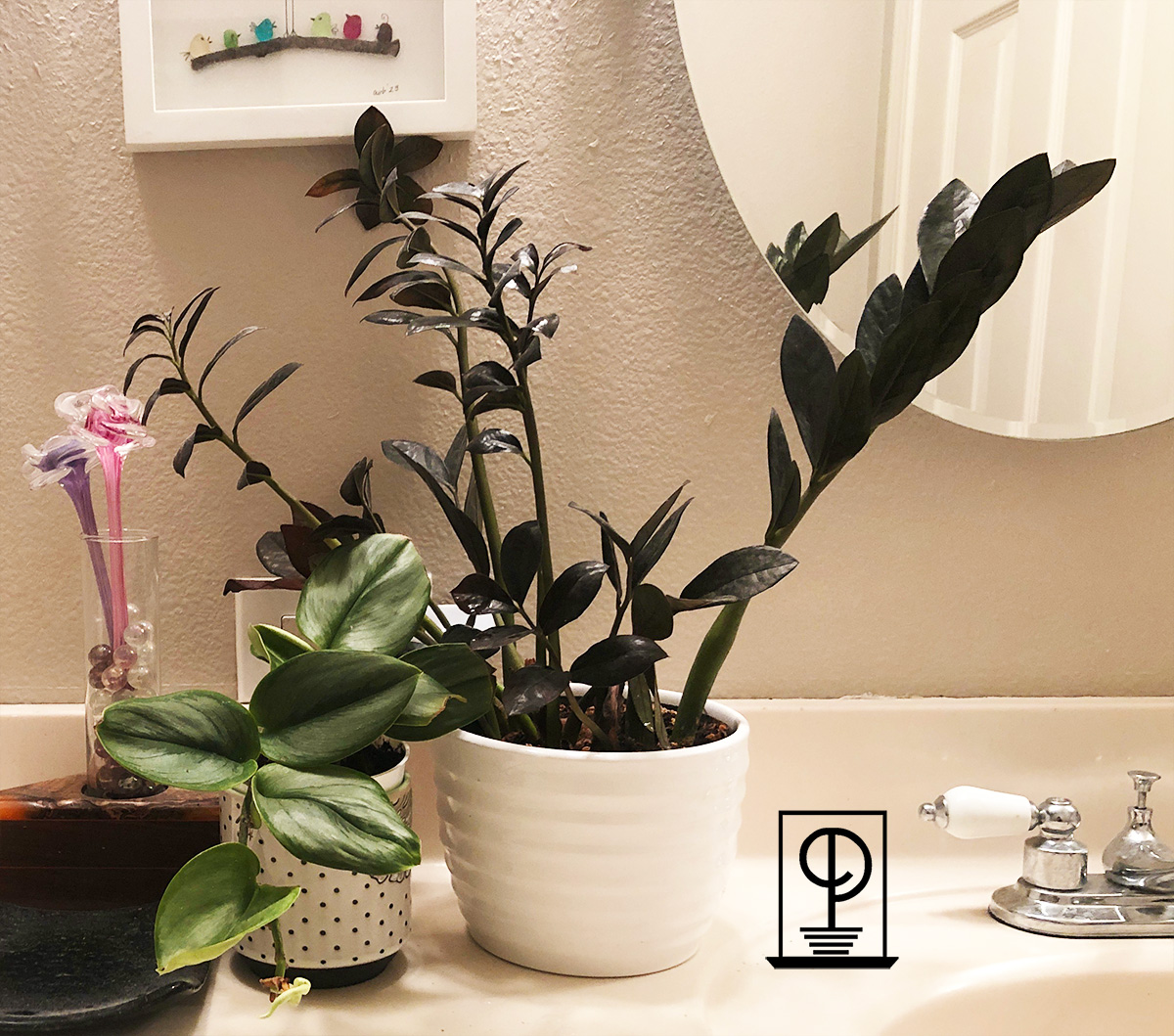 The Black ZZ Plant makes an elegant statement piece with a sense of mystique.
The Planted Parlour’s Tips and Tricks for Success!
- Take in the fresh air!ZZ Plants are particularly good at filtering the air and can live in darker spaces, so why not have one (or three) in your bedroom, where you spend 8 hours just breathing. They are particularly good at filtering out common indoor toxins like xylene, toluene, and benzene, which enter homes via gas appliances.
- The drier the betterZZs want a really dry, open mix. Use a well-draining potting mix, such as a succulent or cactus blend.
Learn More…
The ZZ Plant looks ancient because it is. It’s estimated that Zamioculcas plants first showed up over 42 million years ago. Our species (Homo sapiens) hasn’t even been here for 1 million years and our human-like ancestors date back only 6-7 million years.